Systems
Grid-Tied
Solar Electric Systems
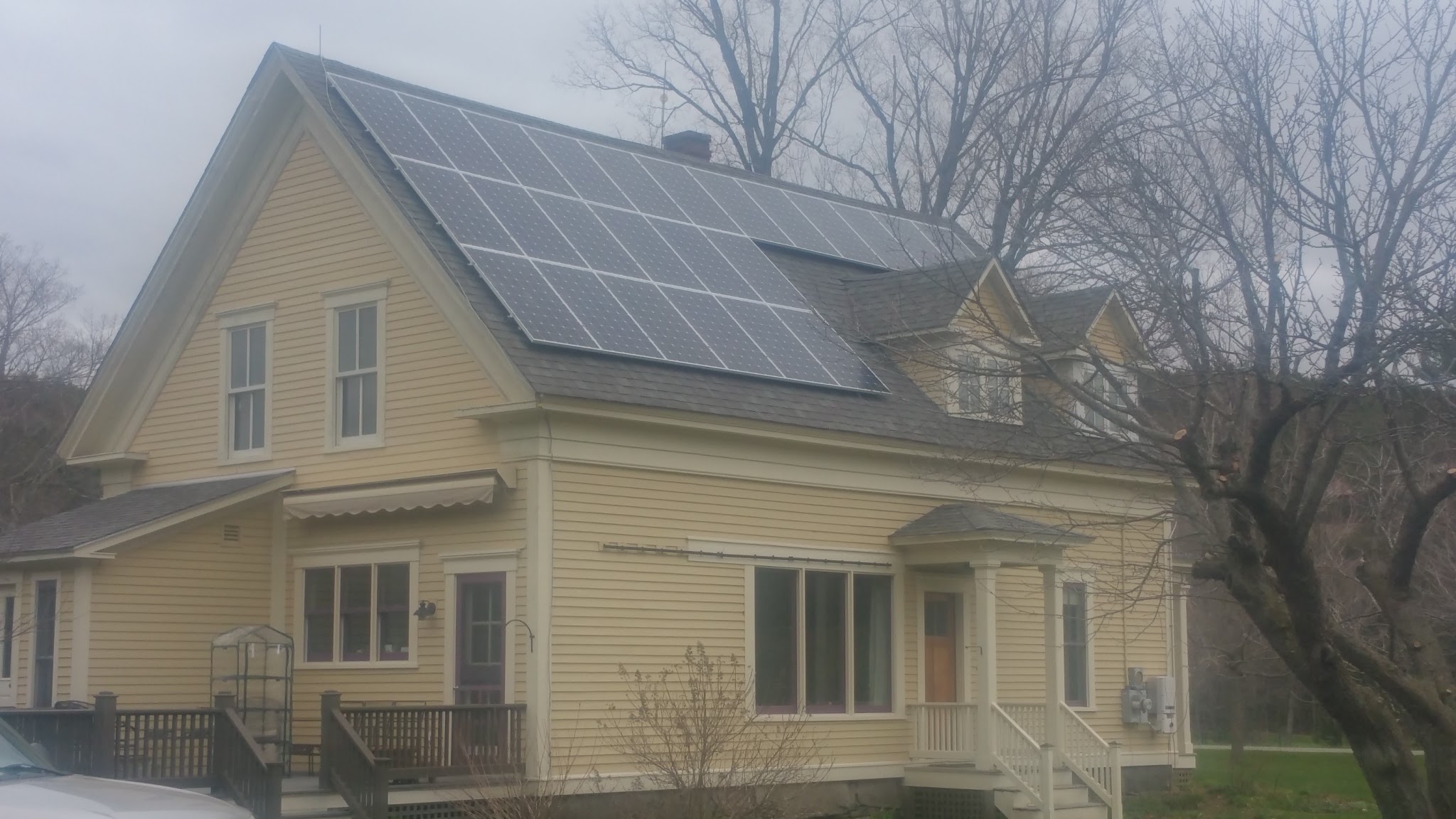
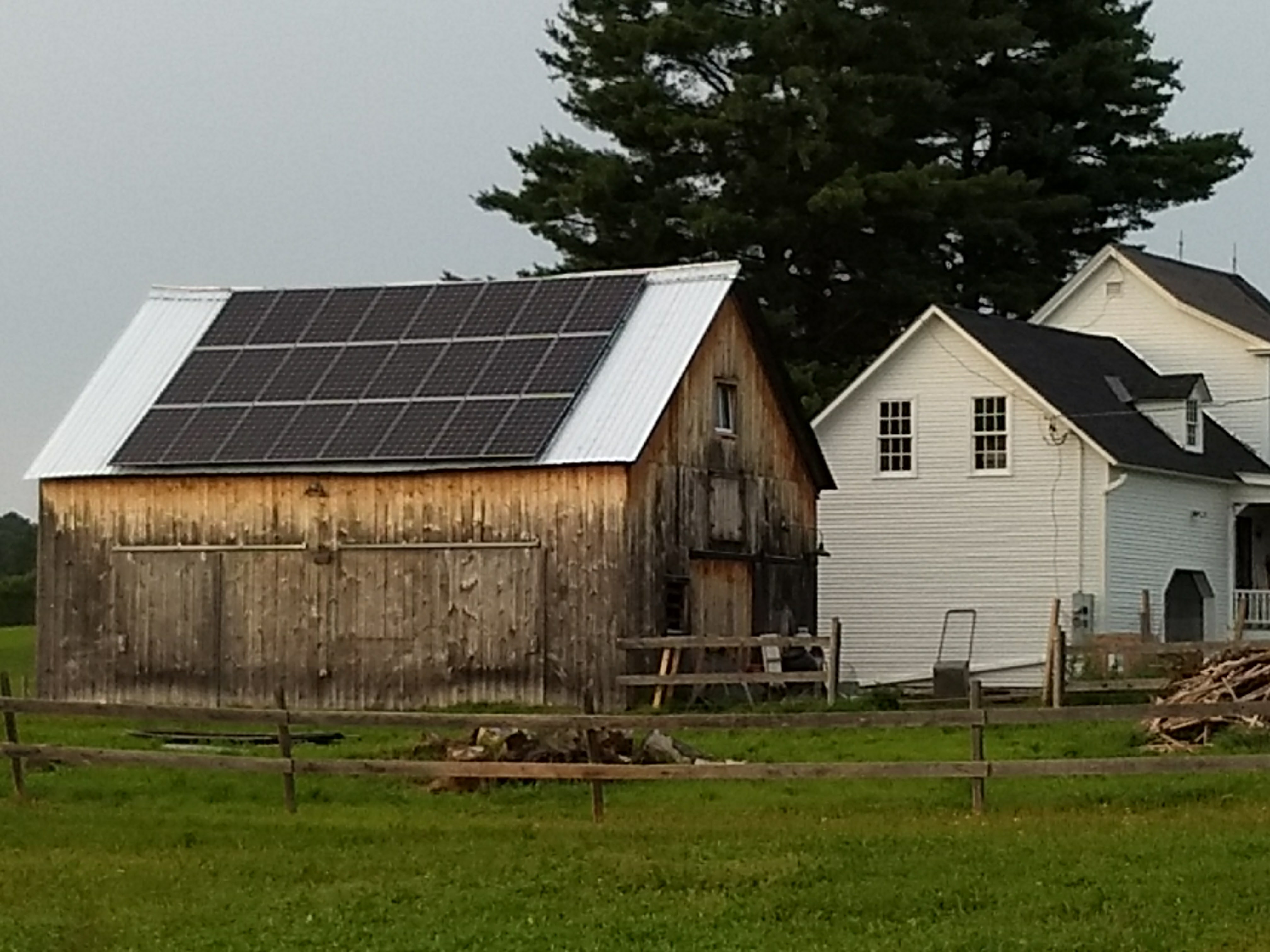
Grid-tied systems produce
direct current (DC) electricity from photovoltaic (PV) panels, which
is transformed into alternating current (AC - typical house electrical
power). The really fun part of this type of system is that if the
PV panels are producing more power than the residence or business
is currently using, then the power is fed back out into the electric
grid for neighbors' use! When this happens the utility meter spins
backward, selling power back to the electric company! This is called
"Net Metering". While the utility company does not currently pay
for excess generation, in many states credits will be carried forward
month-to-month.
Typically, sizing a grid-tied/net
metered system starts with determining monthly/yearly electrical
usage in kWh's (kilowatt hours - the unit of power electric companies
use for billing). This number usually determines the maximum size
of a system. Other considerations are:
- available sunny space
for PV panels (it is important to avoid most shading)
- aesthetic considerations
- cost of various system
sizes
- state incentive/rebate
programs locally available
- federal and state
tax credits available
One area that can be
overlooked in designing systems is thinking about reducing the demand
for power. Investments in more energy efficient electrical appliances
and equipment, as well as making considered changes in patterns
of usage (eg turning off appliances, lights, etc not in use) where
feasible, is almost always a much more cost effective and environmentally
friendly choice than installing a larger system.
Power can continue to
be created during grid outages by installing a system with battery
back-up capability. However, without battery back-up, Grid-Tied
systems will not produce power when the power grid shuts off (ie
during blackouts). This is a requirement by law.
Grid-Tied
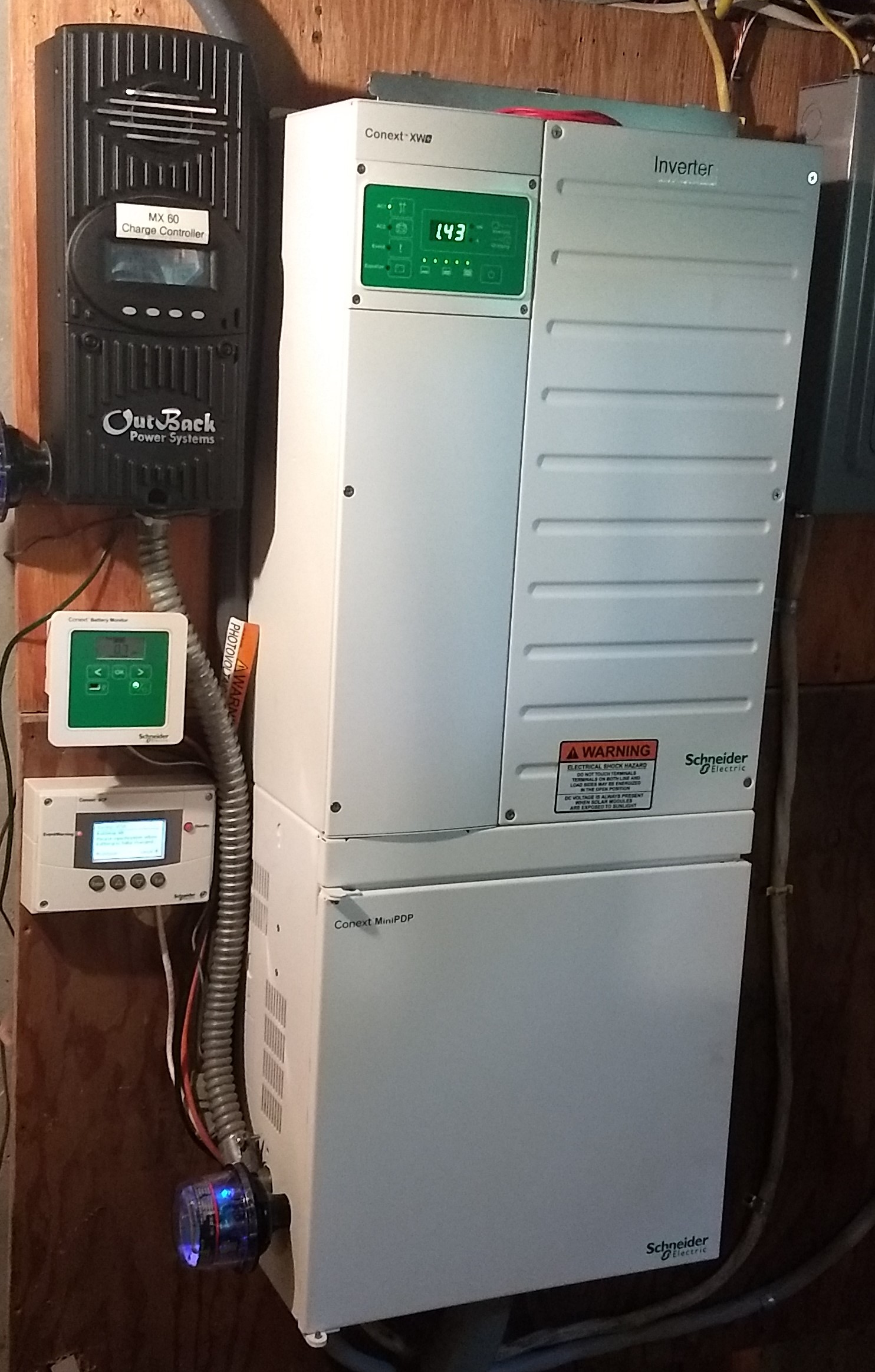
Solar Electric Systems with Battery Back-up
Grid-Tied solar electric systems with battery back-up are similar
to straight Grid-Tied systems, with the added advantage of continuing
to produce power during grid outages. Due to the added equipment
and complexity, these systems are significantly more expensive.
However, they do provide the comfort and security of continuing
to produce and provide power during blackouts (as well as a sense
of self-satisfaction when your neighbors see your lights on when
theirs are out).
Off-Grid
Solar Electric Systems
Off-grid solar electric systems are power systems completely independent
of outside power sources. They produce power from photovoltaic (PV)
panels, which is then converted into usable house power, or stored
in batteries for later use. These systems are often coupled with
other power generating technologies (gas or diesel generators, wind
turbines, hydro turbines, etc), to produce power when there is not
enough solar power available for the required power loads. The system
typically includes:
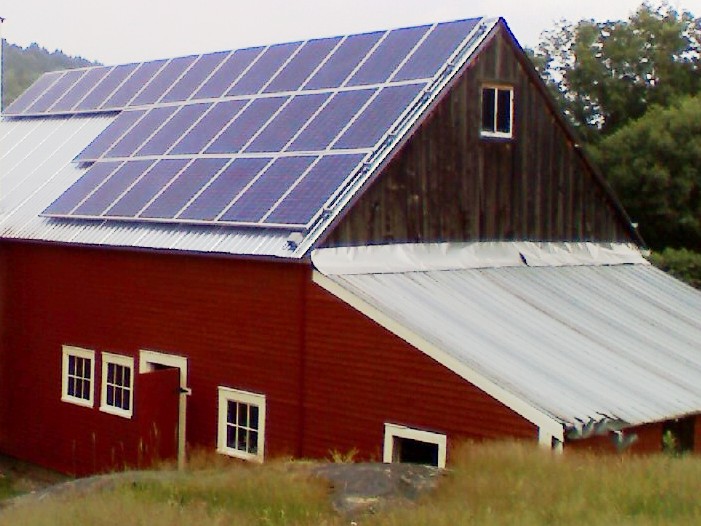
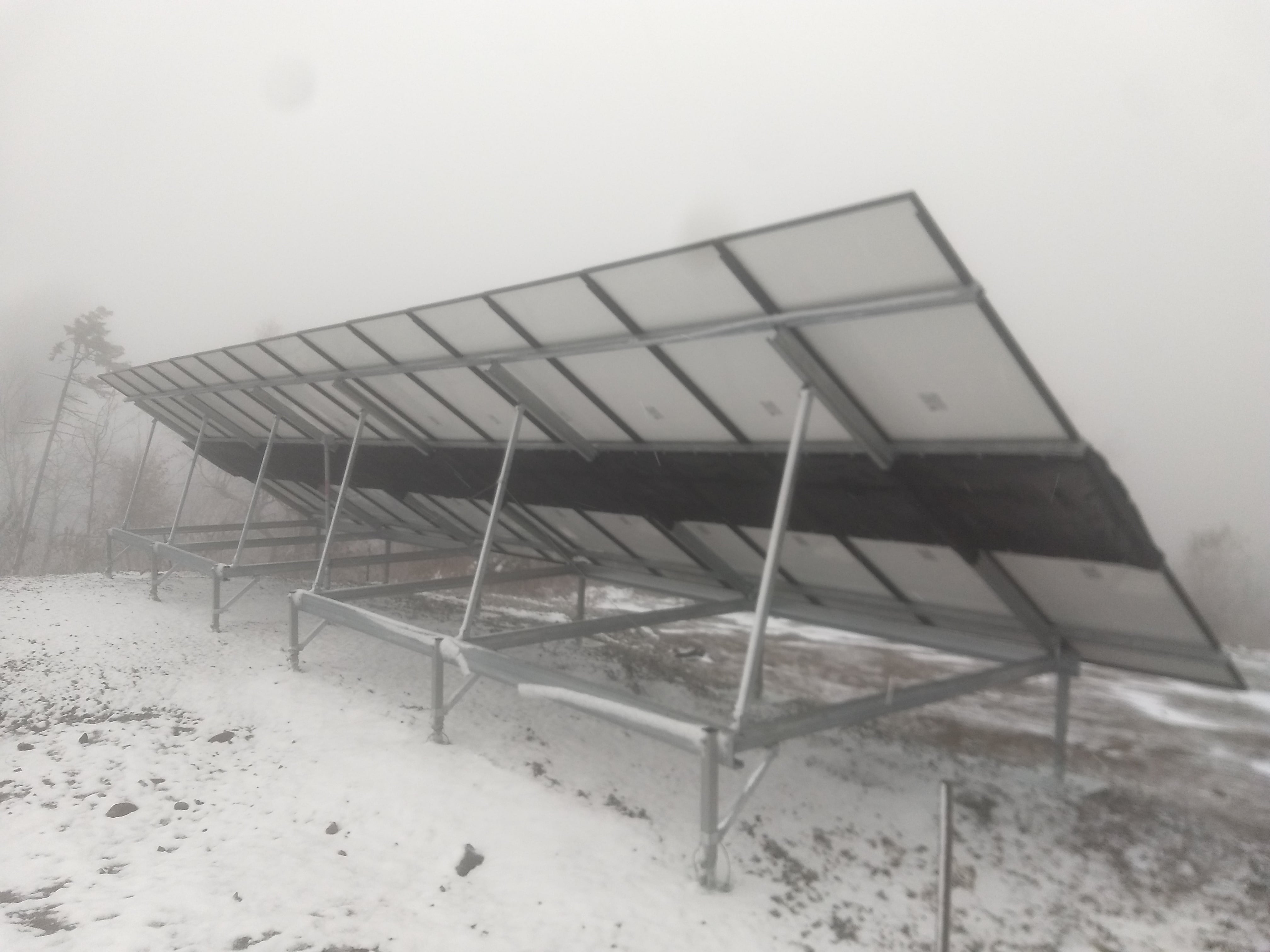
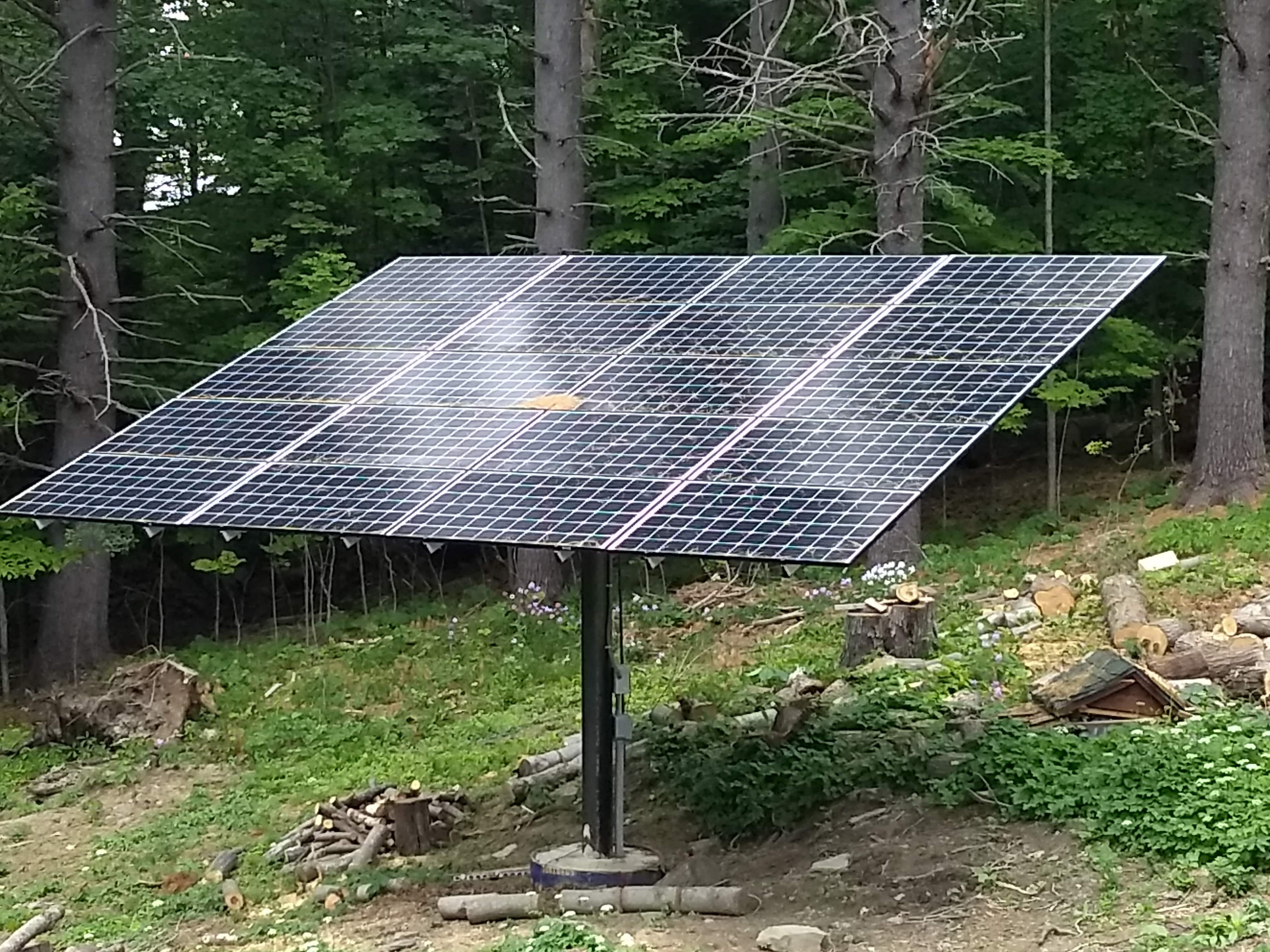
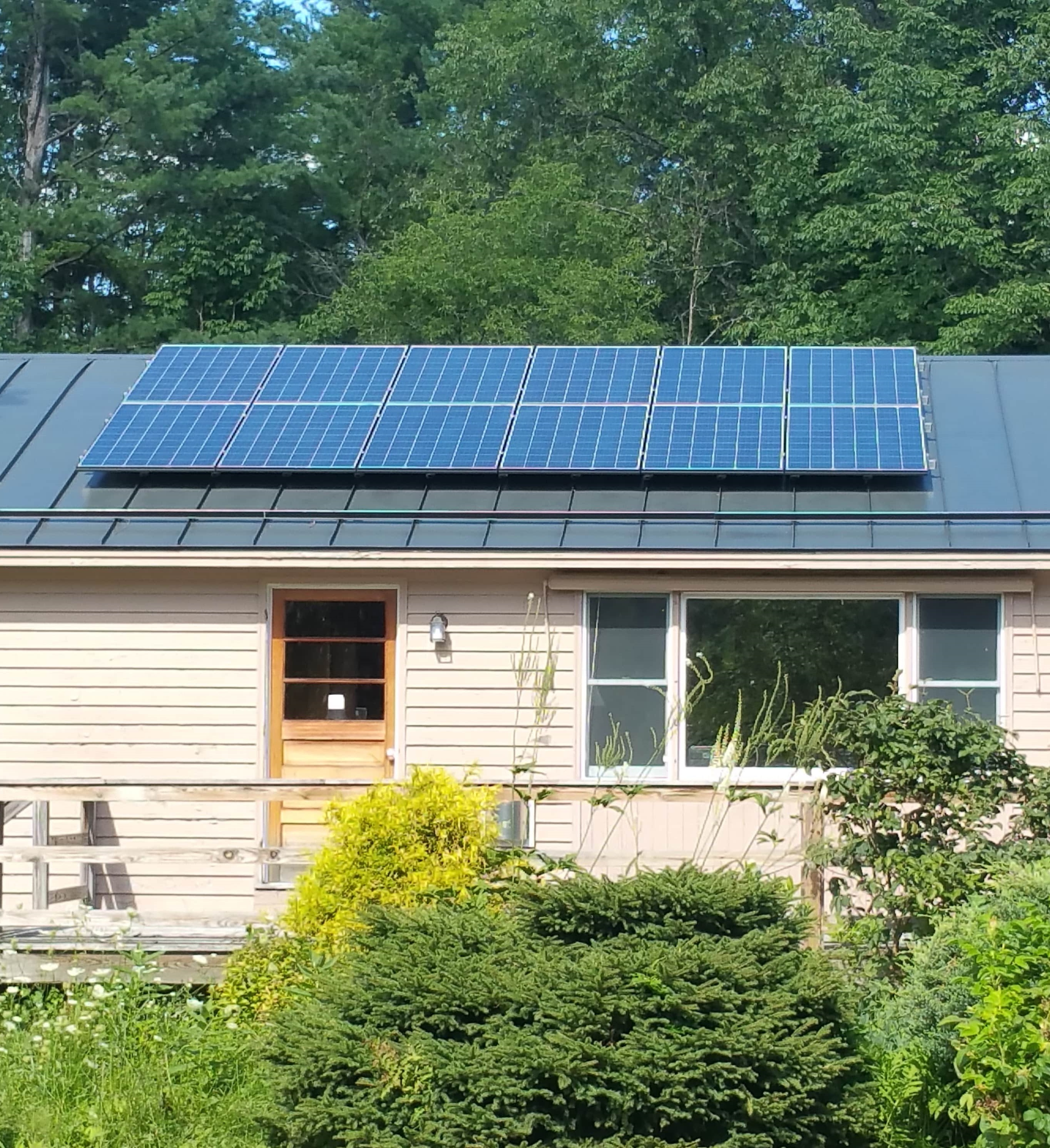
- PV panels roof, pole or ground mounted
- An "Inverter" which changes the PV and battery power into AC
house power
- A charger which uses generator power to charge the batteries
- A "deep-cycle" battery bank for storage of power from the various
generating sources
|